10 Famous Expats Who Shaped Thailand’s History and Culture

From royal courts to modern boardrooms, these expats left lasting legacies across Thailand
Thailand has long welcomed global influences, and across centuries, a number of expats have played defining roles in shaping the country’s political landscape, cultural identity, and economic growth. From early adventurers in the Ayutthaya Kingdom to modern business leaders, these figures offer a fascinating lens into how Thailand has evolved through cross-cultural exchange.
Constantine Phaulkon — Royal Advisor and Diplomat (1647–1688)

A Greek adventurer of Venetian descent, Constantine Phaulkon rose to prominence in the 17th century during the reign of King Narai of Ayutthaya. Arriving in Siam as a trader, his exceptional language skills and diplomatic instincts quickly earned him royal favor, allowing him to rise to one of the highest positions in the court, overseeing foreign affairs and trade.
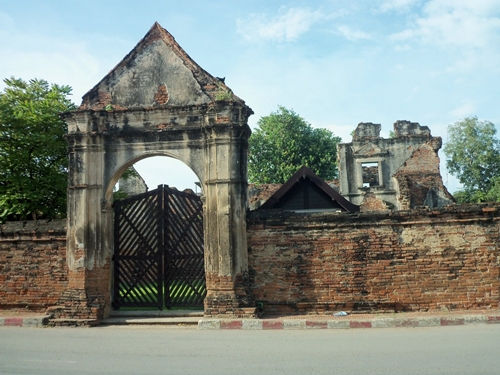
Phaulkon played a central role in strengthening diplomatic and commercial ties between Siam and France, placing the kingdom firmly within a global network of exchange. His legacy is still felt in Lopburi, where historic sites linked to King Narai’s international court reflect this outward-looking era in Thai history.
Robert Hunter — Merchant and Trade Pioneer (1792–1848)
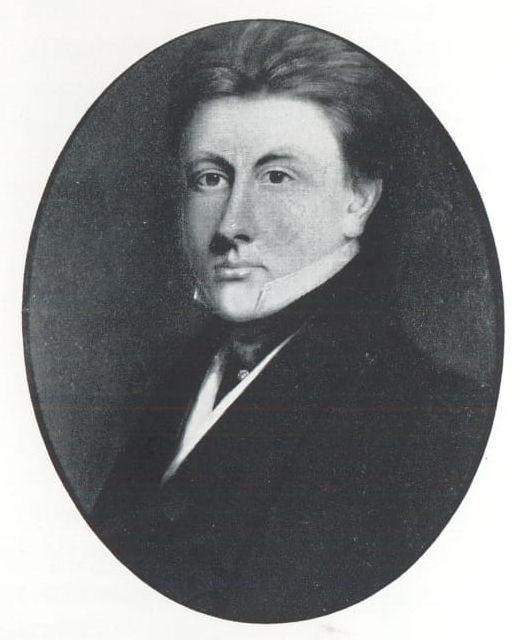
Robert Hunter was among the first western merchants to establish a foothold in early Rattanakosin-era Bangkok. Arriving in the 1820s, he founded the British Factory, widely considered the city’s first western-style trading house and a precursor to modern retail in Thailand. Fluent in Thai and well-connected within the royal court, he became a key intermediary in early international trade.
His presence introduced new commercial practices and helped shape Bangkok’s transformation into a trading hub. Though his career in Siam eventually ended, his influence endures in Thailand’s long-standing engagement with global commerce.
Dan Beach Bradley — Missionary Doctor and Publisher (1804–1873)
Dan Beach Bradley, an American protestant missionary and physician, arrived in Siam during the 19th century and became one of the country’s early agents of modernization. Through his medical work, he introduced western practices such as vaccination, significantly improving public health during a time of limited medical knowledge.
In addition to medicine, Bradley pioneered Thai-language printing and publishing, helping to spread knowledge and new ideas more widely. His contributions laid the groundwork for both modern healthcare and print culture in Thailand, with lasting effects still visible today.
The legacy of Dan Beach Bradley lives on through Yale’s archives, which preserve his dictionaries, journals, maps, and writings on Siamese culture and language. The collection also includes royal documents and linguistic studies, offering a rare glimpse into 19th-century Siam and early cross-cultural exchange.
James Fitzroy McCarthy — Surveyor and Mapmaker (1853–1919)
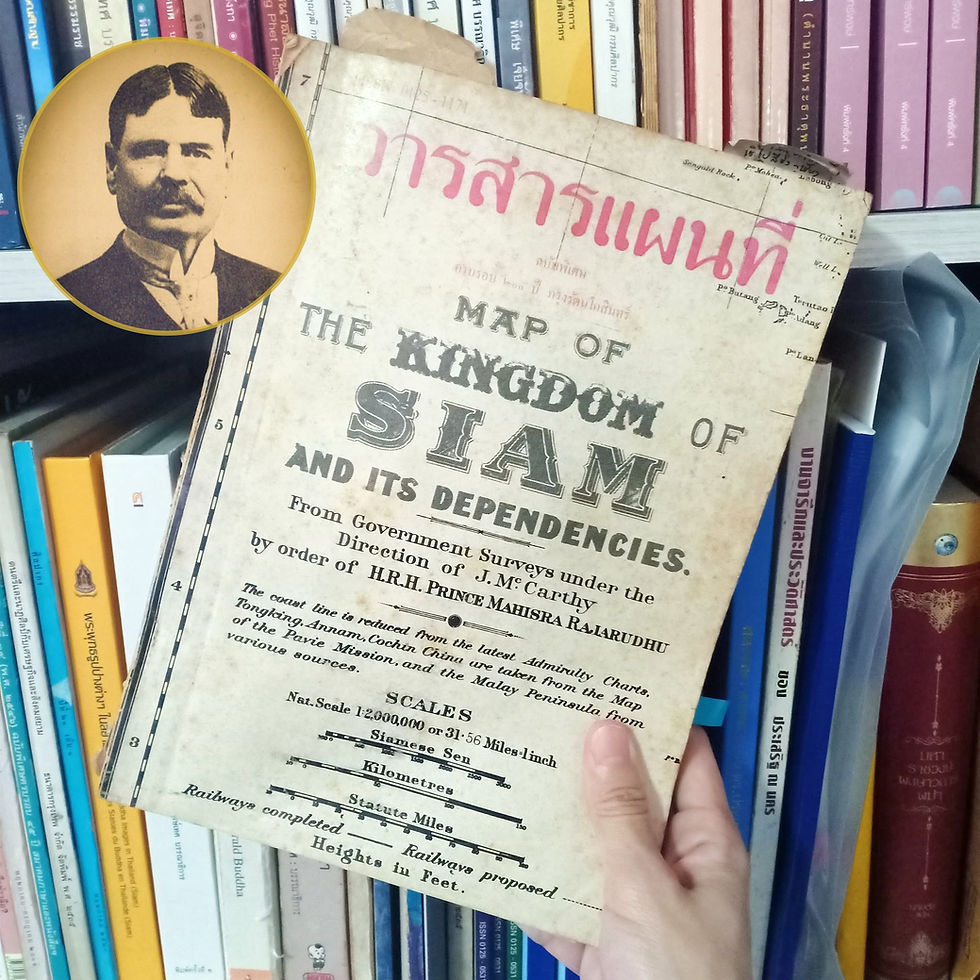
Irish-born James Fitzroy McCarthy arrived in Siam during the reign of King Rama V, a period of sweeping reform and modernization. As a surveyor, he undertook extensive expeditions across the country, producing the first accurate maps of Siam and helping define its territorial boundaries.
Appointed as the first head of the Royal Survey Department, McCarthy’s work supported infrastructure development and national administration. His legacy continues in Thailand’s geographic systems and modern understanding of its landscape. His early maps of Siam are on display at Royal Thai Survey Department in Lat Prao, Bangkok.
Silpa Bhirasri — Artist and Founder of Modern Thai Art (1892–1962)

Born Corrado Feroci in Italy, Silpa Bhirasri became a transformative figure in Thailand’s art world after relocating in the early 20th century. As both an artist and educator, he introduced Western techniques while nurturing a distinctly Thai artistic identity, earning recognition as the father of modern Thai art.
He founded Silpakorn University, which remains one of the country’s most important art institutions, and created numerous public sculptures across Bangkok. His influence continues through generations of Thai artists shaped by his vision.
Jim Thompson — Silk Entrepreneur and Cultural Preservationist (1906–1967)


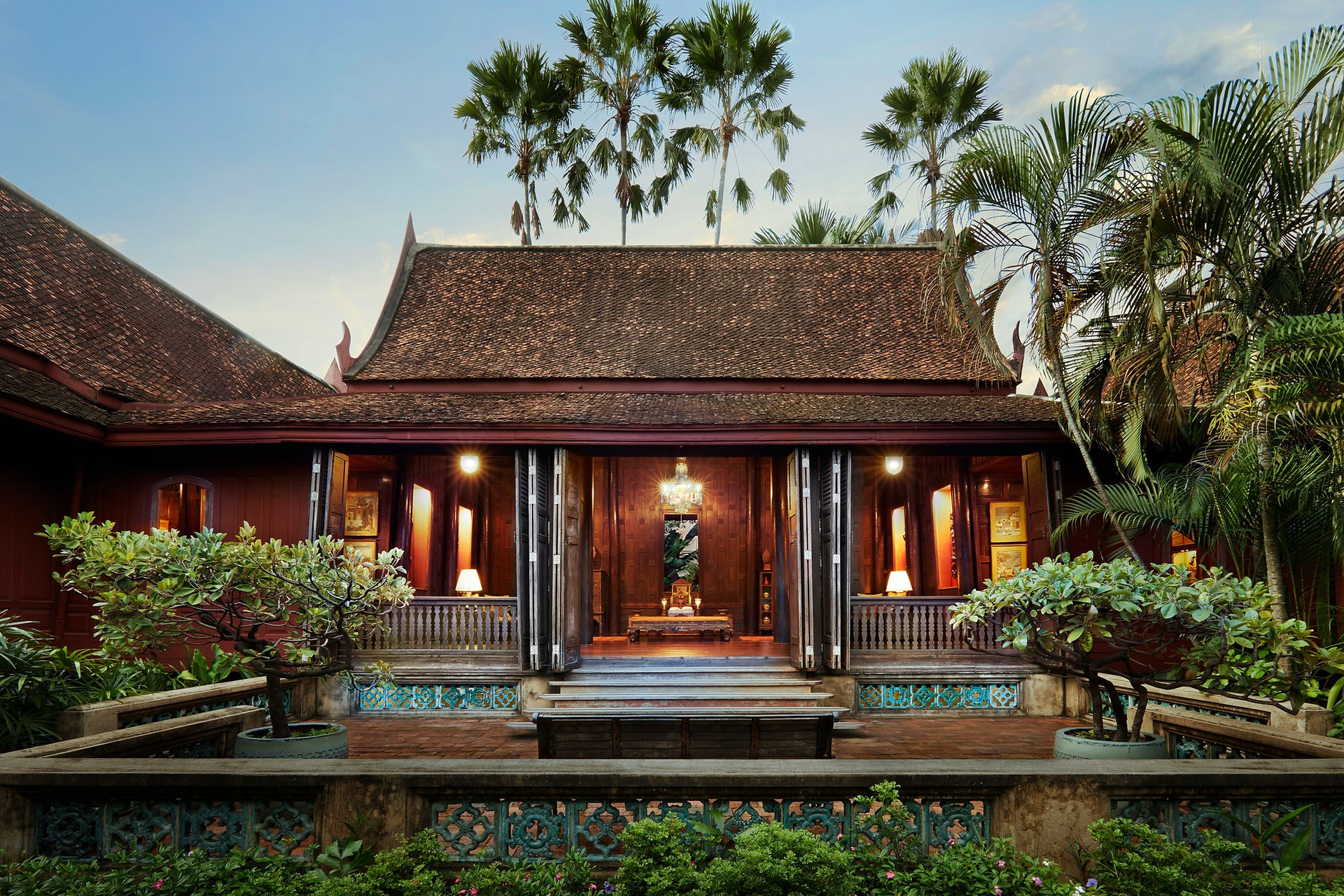

Jim Thompson, an American entrepreneur, arrived in Thailand after World War II and played a pivotal role in reviving the Thai silk industry. By modernizing production and introducing Thai silk to global markets, he transformed a traditional craft into a major export and symbol of Thai identity.
Today, his former residence, the Jim Thompson House Museum, stands as a cultural landmark in Bangkok. His legacy lives on through Thailand’s global reputation for silk and its continued appreciation of traditional craftsmanship.
2026 commemorates the 59th Year of Jim Thompson's disappearance and his 120th birthday. You can now visit House on the Klong, the Bangkok residence and art collection owned by Jim Thompson.
Jaspal Singh — Fashion Entrepreneur and Retail Pioneer (1916–2008)


Jaspal Singh, an Indian immigrant who arrived in Thailand in the mid-20th century, laid the foundation for one of the country’s most influential fashion and retail empires. Beginning in 1947, he started by importing high-quality linen and bedding products into Bangkok’s Phahurat district, building a reputation for quality and reliability before expanding into ready-to-wear fashion.
In 1972, he opened the first Jaspal boutique at Siam Center, marking a turning point that would transform the business into a leading Thai fashion powerhouse. Today, the Jaspal Group—now led by the third generation of the Singhsachathet family—operates hundreds of stores across Thailand and ASEAN, with a portfolio of brands including Jaspal, CPS CHAPS, CC DOUBLE O, LYN, and LYN AROUND, shaping how modern Thailand dresses and shops.
Bruce Gaston — Musician and Cultural Innovator (1946–2021)
Bruce Gaston, an American musician who made Thailand his home during the Vietnam War era, became a pioneering force in contemporary Thai classical music. Immersing himself in Thai musical traditions, he collaborated with local artists to create new compositions that blended Eastern and Western influences.
As co-founder of the Fong Naam band, Gaston helped redefine Thai classical music for modern audiences. His legacy continues in Thailand’s music education and performance scene.
William Heinecke — Entrepreneur and Hospitality Mogul (1949–present)


William Heinecke, an American-born entrepreneur who built his career in Thailand, is one of the country’s most prominent business figures. Starting as a young entrepreneur, he founded Minor International, which has grown into a global hospitality and lifestyle empire.
William’s first hotel venture was in 1978 with the Royal Garden Resort in Pattaya, Thailand. Minor Hotels is now one of the largest hotel owners and operators based in Asia. The company’s hotels, resorts and serviced suites are operated under Minor Hotels’ Anantara, Avani, Elewana, Oaks, NH Hotels, NH Collection, nhow and Tivoli brands, as well as management agreements with Four Seasons, Marriott, St Regis and Radisson Blu.
Dr. Harald Link — Industrialist and Business Leader (1955–present)

Dr. Harald Link, a German-born businessman, represents the third generation of the Link family to lead B.Grimm, one of Thailand’s oldest companies with roots dating back to 1878. Founded by German pharmacist Bernhard Grimm as a trading business serving the Siamese court, the company later came under the stewardship of the Link family, who expanded and modernized its operations across decades.
As chairman, Harald Link has continued this legacy, transforming B.Grimm into a major player in energy, healthcare, and infrastructure while maintaining its long-standing ties to Thailand. His leadership reflects a blend of heritage and forward-looking innovation, with the company remaining a cornerstone of Thailand’s industrial landscape today.


Comments