9 Quirky Museums That Reveal the Real Bangkok

Discover community museums, oddball collections and neighborhood stories beyond the big-name attractions
Bangkok is a culturally rich and diverse capital with a long, layered history. Since 1782, it has served as Thailand’s capital and a crossroads where trade, technology and beliefs converge – from early traders to western doctors and missionaries who brought modern medicine and new ideas. Today, Bangkok is still an ever-changing city where glass towers sit comfortably beside wooden houses, and old communities quietly guard their stories.
One of the best ways to peel back those layers is through community and specialty museums tucked into back alleys and local neighborhoods. Here are some to get you started.
Bangkokian Museum
A true hidden gem in the Bang Rak district on Charoen Krung Soi 43, the Bangkokian Museum feels like stepping into an old family home rather than a formal institution. Set in beautifully preserved traditional wooden houses off Charoen Krung Road, it shows how middle-class Bangkok families lived in the early 20th century, before and after World War II.
Wander through three houses filled with original furniture, kitchenware, clothing, photos and documents that trace the city’s evolution from sleepy riverside town to bustling metropolis. It’s an intimate, human-scale way to understand how everyday Bangkokians experienced modernisation.

Pipit Bang Lamphu (Bang Lamphu Museum)
Located near the old town, Pipit Bang Lamphu is a community learning center that tells the story of the Bang Lamphu neighborhood – one of Bangkok’s oldest trading and entertainment districts. The museum sits in a former nobleman’s house that has served many lives: residence, warehouse, printing school and government press.
Inside, rotating exhibitions explore local history, while permanent displays cover Bangkok’s early city defenses, the role of the Treasury Department, and the multicultural life of Bang Lamphu from the early Rattanakosin era to today. Expect stories of commerce, nightlife, river life and the mix of Thai, Chinese and other communities that shaped the area.
Siriraj Museum (Siriraj Medical Museums)
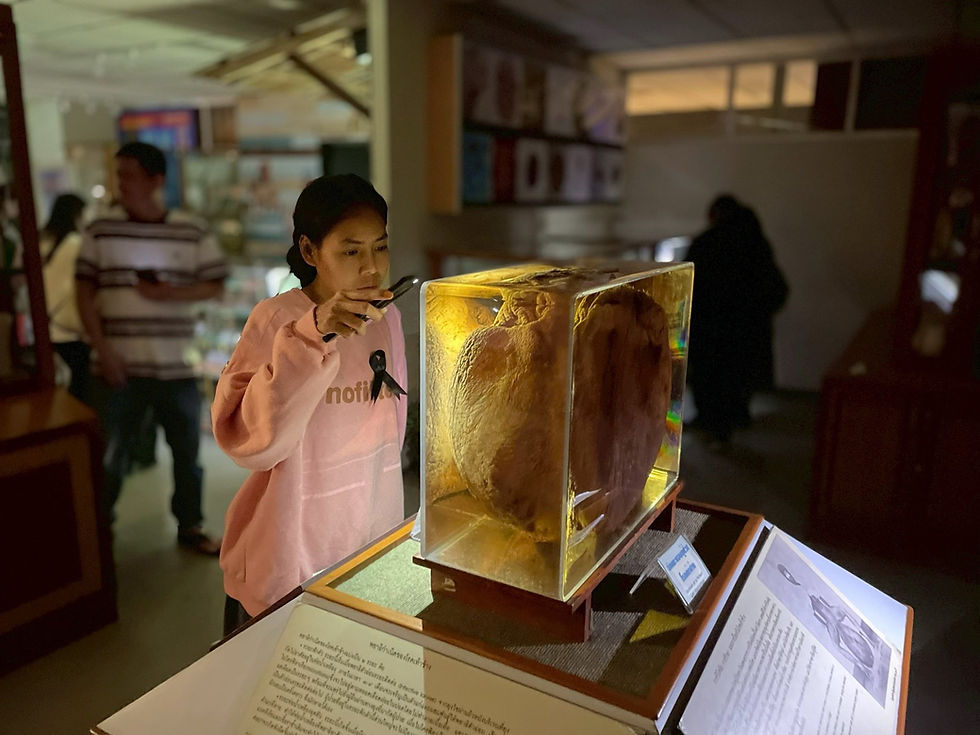
Across the river from the Grand Palace, Siriraj Hospital is Thailand’s first medical school and home to a complex of six fascinating and intense medical museums. Originally created as teaching tools for medical students, they are now open to the public and offer a deep dive into how modern medicine developed in Thailand.
Highlights include the Siriraj Surgery Museum, which traces over a century of surgical innovation with instruments, operating room reconstructions and rare AR experiences that let you step into past operating theaters. Other sections cover pathology, forensics, parasitology, anatomy and the history of major diseases in Thailand, using real specimens, models and historic lab equipment. It’s not for the squeamish, but it’s one of the most eye-opening museums in Bangkok.
Berlin Pharmaceutical Museum
On Charoen Krung Road in the Chinatown–Talat Noi area, the Berlin Pharmaceutical Museum preserves the story of one of Bangkok’s pioneering modern clinics and pharmacies. It grew out of Berlin Dispensary, founded in the 1930s by Dr. Chai Chainuvati, a Shanghai-trained doctor known for his skill, kindness and habit of treating patients whether or not they could pay.
The museum is set in a historic shophouse built in the reign of King Rama IV. Exhibits walk you through the history of the building and the early days of Berlin Dispensary, with reconstructed consulting rooms and compounding pharmacy, original medical textbooks, handwritten prescription books, glass jars, syringes and lab equipment. Upper floors show early tablet-making equipment and how a neighborhood clinic grew into a full pharmaceutical manufacturer. It’s a niche but charming stop for anyone interested in medical or architectural history.
Baan Kudichin Portuguese Descent Museum
Tucked inside a historic riverside community on the Thonburi side of the Chao Phraya River, Baan Kudichin is a small museum housed in an old family home that tells the story of 500 years of Thai–Portuguese relations. The neighborhood, known as Kudichin, has long been home to Catholic families of mixed Portuguese, Vietnamese, Chinese and other ancestry.
Downstairs, a cozy café serves local snacks and drinks; upstairs, exhibits explain how foreign traders, missionaries and doctors – including the famous American Dr. Dan Beach Bradley who popularized modern western medicine and the first printing press to Thailand – once lived and worked here. Everyday objects, photos and family heirlooms illustrate the community’s layered identity. Don’t leave without trying khanom farang Kudichin, a Portuguese-inspired sponge cake topped with dried fruits and candied melon, still made by a handful of local households.
Charoen Chai Community Museum
Located in the Charoen Chai community near Yaowarat Road and Leng Noei Yi Temple, this “Old House Story Museum” sits inside a narrow shophouse that once hosted Chinese opera troupes. Today, the upstairs floor is dedicated to the history of the neighborhood and the lives of the performers who stayed there.
Exhibits combine opera costumes and props with everyday items like desks, telephones, calculators and family photos to show how people lived and worked behind the stage. There are small corners explaining important Chinese festivals celebrated by Thai-Chinese families – from Lunar New Year and Qingming to the Vegetarian Festival and Mid-Autumn. Another section introduces the local conservation group that helped protect the community from redevelopment. It’s a gentle, heartfelt window into old Chinatown life.

Suk Sa Som Museum
Suk Sa Som is a contemporary museum that feels part nostalgia playground, part mini-time capsule. Using more than two thousands vintage objects, toys, household items, printed media and old-style market scenes, it offers a fun, easy-to-understand look at Thai everyday life over the past century.
The museum is divided into five themed zones, from retro toys and classic household goods to old professions and a recreated 100-year-old market. It’s very family-friendly, with lots of visual storytelling that doesn’t require deep Thai language skills, making it a relaxed way to understand how Thailand’s consumer culture and lifestyle have changed. Food and drinks are available at the front, so you can make an afternoon of it.
Silpa Bhirashri National Museum
Art lovers should not miss this small but important museum dedicated to Professor Silpa Bhirasri (Corrado Feroci), the Italian-born sculptor who founded Silpakorn University and is considered the father of modern art education in Thailand.
The museum is split into two main sections. The first showcases paintings, sculptures and prints by Silpa’s close students – many of whom became leading figures in early contemporary Thai art – giving you a sense of how Western academic techniques blended with Thai traditions. The second recreates Silpa’s original studio with his desk, tools, typewriter, records, maquettes and rare books, plus models of his most famous public works, including the Democracy Monument and major royal statues. It’s a compact but fascinating stop if you want to understand how Thai art became what it is today.
Snake Farm (Queen Saovabha Memorial Institute)
The second-oldest snake farm in the world, this institution run by the Thai Red Cross is both an education center and a research facility. It’s the go-to place in Bangkok to learn about snakes, venom and antivenom – and to see these reptiles up close in a safe environment.
Exhibits explain snake biology, how to tell venomous from non-venomous species, and what to do in case of a snake bite. The farm also runs training programs for volunteers and police on safe snake handling. Visitors can watch venom extraction demonstrations, see live handling shows and snap photos at designated spots. It’s surprisingly informative, very memorable and ideal for science-curious kids and adults alike.

Comments