9 UNESCO Creative Cities in Thailand: A Mini Guide to What to Eat, See and Experience

A mini guide to Thailand’s nine UNESCO Creative Cities, from must-try local dishes and traditional crafts to design destinations and musical heritage

From Phuket’s multicultural cuisine and Chiang Mai’s centuries-old craftsmanship to Bangkok’s contemporary art spaces and Suphan Buri’s distinctive folk music, Thailand’s nine UNESCO Creative Cities offer a cultural itinerary through food, art, design, and music.
Thailand now has nine destinations in the UNESCO Creative Cities Network, spanning four creative fields: Gastronomy, Crafts and Folk Art, Design, and Music. The list includes Phuket, Phetchaburi, Songkhla, Chiang Mai, Sukhothai, Nan, Bangkok, Chiang Rai, and Suphan Buri.
But what does being a Creative City mean for travelers? Think of it as an invitation to look beyond the usual attractions: taste dishes rooted in local history, visit temples where regional craftsmanship survives, discover contemporary galleries, or listen to music that tells the stories of the people who live there.
Here is our mini guide to experiencing Thailand’s nine UNESCO Creative Cities.
Cities of Gastronomy
Phuket: A Melting Pot on a Plate
Phuket’s culinary identity was shaped long before beach resorts arrived. Its position on historic maritime trade routes brought together Thai, Chinese, Malay, and other influences, creating a distinctive food culture that remains particularly visible around Phuket Old Town.
The island became Thailand’s first UNESCO City of Gastronomy in 2015, with traditional recipes and family-run food businesses remaining an important part of its culinary identity.

What to eat:
• Mee Hokkien — Phuket-style stir-fried yellow Hokkien noodles, reflecting the island’s Chinese heritage.
• Oh Tao — a savory, sticky oyster and taro dish fried with egg and traditionally eaten as a hearty snack or meal.
• Moo Hong — slow-braised pork belly seasoned with pepper, garlic, and soy sauce, one of the island’s best-known Peranakan-influenced dishes.
• Oh Aew — a cooling Phuket dessert made with jelly and shaved ice, particularly welcome after exploring the Old Town.

What to do: Spend a morning exploring markets and old family-run restaurants around Phuket Old Town. Look beyond the most famous restaurants; some of the best introductions to Phuket cuisine come from longstanding noodle shops and street-food vendors.
Phuket's food traditions are an important part of its UNESCO creative identity, with gastronomy functioning alongside crafts and other cultural practices.
Phetchaburi: Thailand’s City of Three Flavors
Phetchaburi’s culinary heritage is inseparable from its landscape. Salt from the coast, produce from farms and orchards, and the province's celebrated palm sugar have shaped a cuisine built around what locals sometimes describe as three characteristic tastes: sour, salty, and sweet.

Recognized as a UNESCO City of Gastronomy in 2021, Phetchaburi has maintained generations of culinary knowledge through home cooks, markets, traditional sweet makers, and artisan producers.
What to eat:
• Khao chae — rice soaked in jasmine-scented chilled water and accompanied by an elaborate selection of sweet and savory side dishes. Phetchaburi has a particularly strong association with this refined dish.
• Khanom mo kaeng — a rich traditional custard-like dessert for which Phetchaburi is famous, typically made with eggs, coconut milk, and palm sugar.
• Local palm sugar sweets — Phetchaburi's toddy palms are fundamental to the province's sweet-making tradition, so look for desserts made with locally produced palm sugar.

What to do: Start at a local market before exploring the old town and its traditional sweet shops. Combine a food trip with Phra Nakhon Khiri, the historic hilltop palace overlooking the city.
Songkhla: Southern Flavors Shaped by a Great Lake
Songkhla joined the UNESCO Creative Cities Network as a City of Gastronomy in 2025, becoming one of Thailand's newest Creative Cities. Its food culture has been shaped by its history as a port and by Thai, Chinese, Indian, and Javanese influences.
At the heart of the city's kitchen is Songkhla Lake. Its extensive lagoon ecosystem supports hundreds of species of fish, prawns, and shellfish, making freshwater and seafood ingredients central to local cooking.

What to eat:
• Khao yam — Southern Thai rice salad tossed with herbs, vegetables, and a deeply savory dressing. Different versions vary by community and season.
• Southern gaeng som — the South's assertively sour and spicy curry, usually prepared with fish and vegetables.
• Songkhla Lake seabass — one of the area's signature ingredients and a registered Thai Geographical Indication product.
• Local seafood — look for fish, prawns, and shellfish sourced from Songkhla Lake and the surrounding coast.

What to do: Explore Songkhla Old Town, where historic Sino-Portuguese-style shophouses, street art, markets, and small restaurants make it easy to combine sightseeing with a food crawl. The province's mix of Thai, Chinese, and Malay communities is still reflected in its architecture, cuisine, traditions, and dialect.
Cities of Crafts and Folk Art
Chiang Mai: Where Lanna Craftsmanship Lives On
Founded in 1296 as the capital of the Lanna Kingdom, Chiang Mai developed into an important trading center. Craftspeople settled in communities surrounding the city, establishing traditions that continue to define Chiang Mai today.
The city became a UNESCO City of Crafts and Folk Art in 2017. Its major traditions include pottery, silverwork, wood carving, silk embroidery, and lacquerware.

What to see:
• Wat Sri Suphan — often called the Silver Temple, it provides a striking introduction to the metalworking tradition associated with the Wua Lai neighborhood.
• Wua Lai — explore the surrounding community to discover Chiang Mai's longstanding silver craftsmanship.
• Bo Sang and San Kamphaeng — venture outside the Old City for communities associated with traditional umbrellas and handicrafts.
Don't miss: Chiang Mai Design Week offers a contemporary counterpoint to the city's traditional crafts, showing how a new generation of designers is reinterpreting Lanna materials and techniques.
Sukhothai: Art from Thailand’s First Great Kingdom
Sukhothai's creative identity reaches back to the 13th and 14th centuries, when the city served as the capital of the first Kingdom of Siam. Its artists absorbed outside influences and local traditions to create the distinctive architecture and Buddhist art now known as the Sukhothai style.
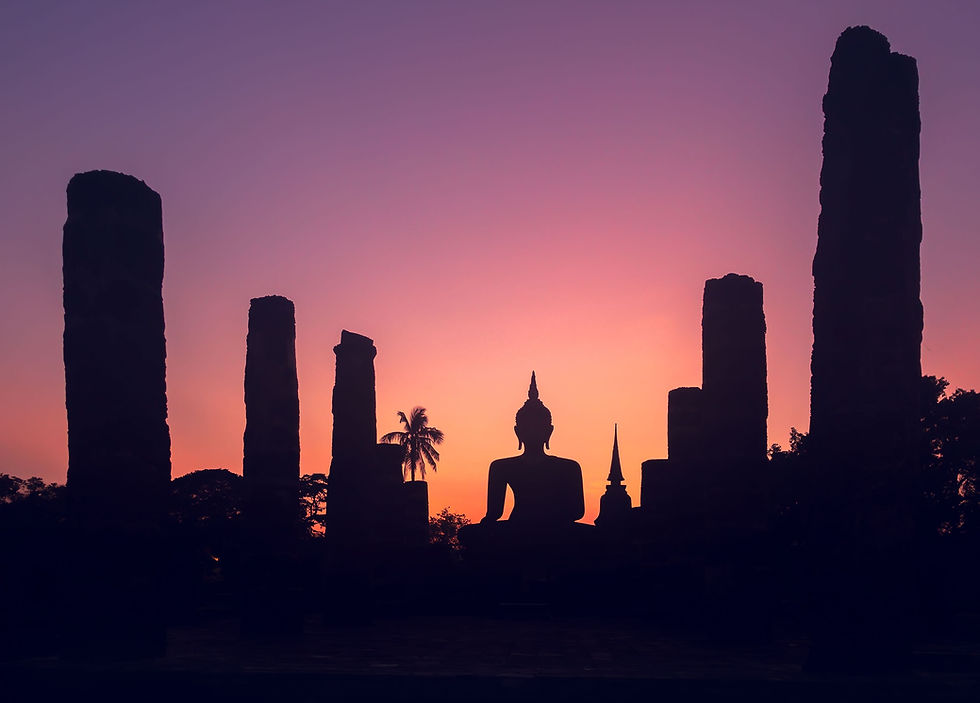
Today, traditional craftsmanship includes textiles, gold and silver ornamentation, ceramics, and the distinctive Sangkhalok ware associated with Sukhothai and Si Satchanalai.
What to see:
• Sukhothai Historical Park — explore Wat Mahathat and the surrounding ruins to understand the artistic language that developed during the kingdom.
• Wat Si Chum — home to the monumental seated Buddha image known as Phra Achana.
• Si Satchanalai — an essential extension of the journey for anyone interested in Sangkhalok ceramics and the area's historic kilns.

Don't miss: The Sukhothai Loy Krathong and Candle Festival transforms the ancient city with illuminated ruins, performances, traditional crafts, and floating krathongs.
Nan: Temples, Textiles and Living Northern Traditions
Nan's creative traditions have evolved over more than seven centuries in close relationship with its mountainous landscape and diverse communities. Textile weaving, embroidery, silverwork, bamboo and rattan basketry, wood carving, mural painting, and pottery all remain part of its cultural identity.
![[PHOTO: Courtesy of https://www.traveloka.com]](https://static.wixstatic.com/media/79085e_3737b8d6d805401cb0371fb12259429d~mv2.webp/v1/fill/w_500,h_334,al_c,q_80,enc_avif,quality_auto/79085e_3737b8d6d805401cb0371fb12259429d~mv2.webp)
What to see:
• Wat Phumin — Nan's essential cultural stop, best known for its historic murals depicting both religious stories and scenes of local life.
• Nan National Museum — a useful introduction to the province's history, ethnic diversity, art, and material culture.
• Local weaving communities — venture beyond the city center to discover textiles and traditional techniques passed between generations.
Don't miss: Nan's traditional long-boat races. The elaborately decorated boats, many featuring naga-headed designs, bring together craftsmanship, community identity, and ritual tradition. UNESCO specifically identifies these racing boats as an expression of Nan's craft heritage.
Cities of Design
Bangkok: Design Hidden in Plain Sight
Bangkok became a UNESCO City of Design in 2019, but its creative identity isn't confined to galleries. It appears in architecture, graphic design, fashion, furniture, adaptive reuse, public spaces, and neighborhoods where historic buildings are continually finding new purposes.

Where to go:
• Thailand Creative & Design Center (TCDC) — one of the best starting points for understanding Thailand's contemporary design landscape, located inside the historic Grand Postal Building in Charoenkrung.
• Bangkok Art and Culture Centre (BACC) — a major contemporary arts venue with rotating exhibitions spanning visual art, photography, design, and multidisciplinary projects.
• Museum Siam — housed in a historic building near Sanam Chai, the museum uses contemporary exhibition design and interactive storytelling to explore ideas of Thai identity.
• Talat Noi and Charoenkrung — rather than a single gallery, explore the entire neighborhood for street art, adaptive reuse, old shophouses, galleries, cafés, and creative spaces.
TCCN Forum 2026 itself highlighted Talat Noi, River City, and TCDC as part of its Bangkok Technical Tour exploring the capital as a City of Design.
Don't miss: Bangkok Design Week, when galleries, studios, historic buildings, streets, and unexpected urban spaces across the capital become part of a citywide celebration of design.
Chiang Rai: Where Art, Architecture and Landscape Meet
Chiang Rai became a UNESCO City of Design in 2023. Unlike Bangkok's urban design ecosystem, Chiang Rai's creative identity is closely connected with Northern Thailand's landscapes, Lanna heritage, contemporary art, and the work of influential local artists.

Where to go:
• Baan Dam Museum — created by National Artist Thawan Duchanee, this extraordinary complex combines Lanna-inspired architecture with the artist's paintings, sculptures, carvings, and collections.
• Wat Rong Khun — Chalermchai Kositpipat's instantly recognizable White Temple demonstrates how traditional Buddhist artistic forms can be radically reinterpreted through contemporary design.
• Wat Rong Suea Ten — the Blue Temple offers another expression of Chiang Rai's contemporary approach to Buddhist art and architecture.
• Mae Fah Luang Art and Cultural Park — explore Lanna art, architecture, and cultural heritage in a landscaped setting.
What to do: Give Chiang Rai's art scene at least a full day rather than visiting only the White Temple. The city's creative identity becomes much clearer when you experience the dramatically different approaches of its artists and cultural spaces.
City of Music
Suphan Buri: The Home of Thai Country Music
Around 100 kilometers from Bangkok, Suphan Buri is an ancient Central Thai city whose history stretches back centuries. But its UNESCO Creative City designation celebrates something less visible than an ancient temple: its sound.
Suphan Buri became a UNESCO City of Music in 2023 and is particularly important to the development of luk thung, or Thai country music. After World War II, the province emerged as a center of the genre, which blends rural storytelling and folk sentiments with evolving musical influences and instrumentation.
The province has also maintained classical music, brass bands, and numerous folk traditions.
What to listen for:
• Luk thung — Thailand's hugely popular country music tradition, characterized by songs about rural life, love, hardship, longing, and changing society.
• Phleng e-saew — one of Suphan Buri's most distinctive folk traditions. Historically performed as an improvised call-and-response between male and female singers, E-saew is closely tied to community life and has been passed between generations for more than a century.
• Phleng ruea — traditional boat songs associated with the riverine culture of Central Thailand.
Suphan Buri's folk traditions also include phleng choi, phleng phuang malai, phleng lam tat, and other forms associated with agricultural communities, festivals, and everyday rural life.
Where to experience it:
• Suphan Buri National Museum — start here for context. Its folk-music exhibition explores e-saew, boat songs, and other traditions associated with the province's agricultural and riverside communities.
• Local festivals and cultural events — E-saew and other traditional performances are often associated with community celebrations rather than a permanent nightly stage, so check the provincial cultural calendar before traveling.
• Suphan Local Beats — while not a year-round attraction, this TAT-backed event has previously combined traditional folk performances with contemporary music, crafts, and local food, demonstrating how the province is bringing its musical heritage to new audiences.
For music fans, Suphan Buri is best approached as a cultural journey rather than a conventional sightseeing trip. Understanding E-saew and the province's agricultural folk songs first makes it easier to see how Suphan Buri eventually became such an important center for luk thung.
Turn Thailand’s UNESCO Creative Cities Into a Travel Itinerary
Taken together, Thailand's nine UNESCO Creative Cities form an alternative travel map of the country.
Follow food south to Phuket, Phetchaburi, and Songkhla; explore craftsmanship and folk traditions in Chiang Mai, Sukhothai, and Nan; see how design is reshaping Bangkok and Chiang Rai; then head to Suphan Buri to discover a musical tradition rooted in the rice fields and communities of Central Thailand.
More importantly, these designations aren't simply badges for destinations. They point travelers toward the people, recipes, craftsmanship, neighborhoods, and traditions that give each city its own identity — and provide plenty of reasons to travel deeper once you get there.


Comments