7 Reasons JisuLife Might Be the Only Portable Fan You Need in Thailand

JisuLife has spent a decade turning the humble portable fan into a surprisingly sophisticated piece of personal technology

Phone, wallet, keys, portable fan.
Spend enough time in Thailand and the last item starts to feel less like an accessory and more like part of the daily checklist. Heat here isn't confined to a few summer months. Add humidity, outdoor commutes, markets, queues, concerts and travel, and a handheld fan can end up being used almost every day.
That frequency of use is exactly what changed the way JisuLife thinks about the category.
Founded in 2016, the company entered a market dominated by inexpensive, largely interchangeable fans and decided to approach portable cooling as an engineering problem rather than a disposable gadget. Its first portable fan became China's best-selling USB fan, followed by what the company describes as the industry's first long-life handheld fan. JisuLife has since been ranked the world's No.1 portable fan brand by global sales revenue for four consecutive years, according to Euromonitor International data cited by the company.

Talking to JisuLife CMO Leo Chen reveals that much of the thinking behind the products comes down to a simple question: if you're going to carry a fan every day, why shouldn't you expect as much thought from it as you do from other personal technology?
Here are seven reasons the answer makes particularly good sense in Thailand.
1. It Is Engineered With Southeast Asian Weather in Mind
Thailand isn't simply hot. It is hot, humid and, in many areas, exposed to high levels of salinity, creating a demanding environment for electronics.
For JisuLife, Southeast Asia therefore functions as more than a major market. Chen describes it as a “critical market for product validation.”
“All JisuLife products are required to pass rigorous Double 85 environmental testing,” he explains, referring to testing at temperatures above 85°C and humidity levels above 85%. The testing is intended to ensure the electronic components and finished products can withstand challenging hot and humid environments over time.
The company also conducts performance testing in conditions closer to those consumers actually experience. Laboratory testing of the flagship Handheld Fan Ultra2 was carried out at 36°C and 60% relative humidity. According to JisuLife's results, at a distance of 20 centimeters, the Ultra2 brought 70% of the facial area below 30°C within five seconds, with an airflow width of 13.4 centimeters.
Those are manufacturer test results rather than independent testing, but the conditions provide useful context for understanding the performance claims.
More importantly, Southeast Asia has influenced how JisuLife thinks about the product itself. “The Southeast Asian market has helped us understand something very important: portable cooling is not merely an occasional-use function,” Chen says. “It can become a stylish, everyday lifestyle tool that people carry with them wherever they go.”

2. It Treats a Portable Fan Like Consumer Tech, Not a Throwaway Gadget
There was a time when buying a handheld fan meant finding something cheap that switched on, blew some air and hopefully survived the summer. JisuLife saw an opportunity to rethink that.
“When a product moves from being used occasionally to being used every day, consumers' expectations change completely,” Chen says.
Once something lives permanently in your bag, little frustrations suddenly matter. How long does the battery last? How noisy is it? Does it feel heavy after holding it for ten minutes? Will it suck your hair into the intake? Can you clean it? Will it still perform properly after several years?
JisuLife consequently invests in high-speed motors, impeller structures, airflow channels, battery management, charging efficiency, structural strength and safety systems rather than treating the motor and battery as interchangeable components inside a plastic shell.
“For JisuLife, the goal is not to simply make an inexpensive fan more expensive,” Chen says. “Instead, we ask ourselves a more fundamental question: If a portable fan is truly a consumer technology product, what should it look like?”
That question has kept the company unusually focused. While many consumer-electronics businesses expand into neighboring product categories as they grow, JisuLife has largely stayed within portable cooling, iterating on airflow, motors and batteries from one generation to the next.
3. More Power Isn't Automatically Better
One of the easiest ways to market a fan is to make the numbers bigger.
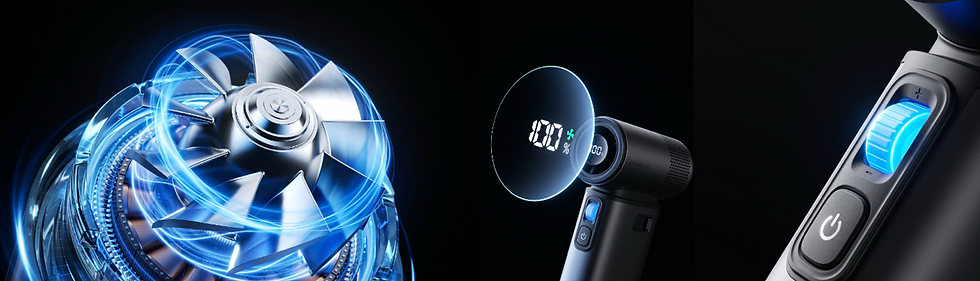
JisuLife's Ultra2 certainly has plenty of them: 100 airflow settings, a 9,000mAh battery and up to 26.6 hours of runtime depending on the setting. But Chen argues that specifications only matter when they solve a real problem.
“We do not believe that ‘100 speed levels are necessarily better than 10,’ or that ‘stronger airflow automatically means a better product,’” he says. “Specifications only have value when they solve real-world problems.” That distinction makes particular sense in Thailand.
Maximum airflow might be exactly what you want walking outside in the afternoon or standing in a concert queue. Sit down in a quiet café or office 15 minutes later and the priorities change. Suddenly noise, weight and gentler airflow matter more. This explains why JisuLife doesn't necessarily recommend its most powerful model to everyone.
The Ultra2 is designed for demanding situations such as travel, outdoor activities, sporting events and commuting in high temperatures. The Pro1S, meanwhile, is positioned for people who prioritize quieter operation, lighter weight and a more refined airflow experience in places such as offices, cafés and public transportation. There is no perfect combination, Chen acknowledges. Stronger airflow needs motor power. Longer battery life generally means a larger battery, which adds weight.
The engineering challenge is making those compromises progressively less noticeable.
“Looking ahead, we hope to reach a point where consumers no longer have to accept a bulky device in order to get powerful airflow, nor sacrifice battery life in order to achieve greater portability,” he says.

4. The Tiny Details May Be the Smartest Features
Some of the best ideas in a product are the ones you don't appreciate until something goes wrong.
JisuLife's intake, for example, uses a honeycomb guard designed to prevent long hair from being drawn into the fan. The rear cover can be removed without tools, allowing dust to be cleaned from the intake rather than gradually accumulating inside. A safety lock prevents the fan from accidentally switching itself on inside a bag and draining its battery.
None is particularly glamorous. None will generate the same attention as an enormous battery or high-speed motor. But that is partly the point.
“The best engineering is often not about making consumers feel that there is a lot of technology inside the product,” Chen says. “It is about making many everyday frustrations disappear naturally.”
His examples illustrate the balancing act behind something that looks deceptively simple: stronger airflow shouldn't create excessive heat; a larger battery shouldn't make the fan cumbersome; and higher rotational speed shouldn't result in irritating noise.
The company's after-sales approach in Thailand follows a similar philosophy. JisuLife operates a replacement rather than repair policy for eligible faulty products sold here, shifting more of the inconvenience away from the customer.
5. The Ultra2 Can Earn Its Place in a Travel Bag
Every gadget you take on a trip has to justify the luggage space. The Ultra2 tries to do more than cool you down.
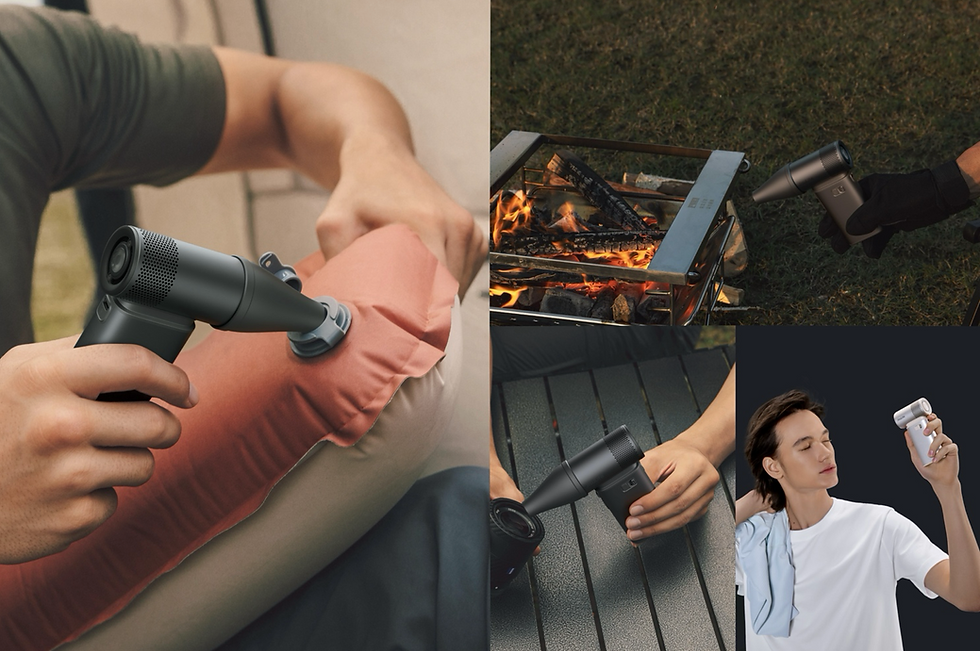
Its 9,000mAh battery supports 18W two-way fast charging, allowing the fan itself to function as a power source for a phone. It also incorporates a torch and emergency light, while magnetic nozzles can concentrate the airflow for uses such as drying hair or clearing dust from equipment. Those features make more sense when viewed through the way people actually travel around Thailand.
A day might begin with a morning flight, continue with several hours outdoors and finish at a night market. Another might involve camping, hiking, a festival or an island excursion where easy access to a power outlet isn't guaranteed.
Chen says the Ultra2 was deliberately created for more demanding outdoor lifestyles, where stronger airflow, battery endurance and multi functionality can offer tangible advantages.
For less demanding daily use, there are simpler alternatives. JisuLife's Life series focuses on accessible everyday cooling, while the Pro series emphasizes endurance and quieter operation. The Ultra series sits at the performance end of the portfolio.
The philosophy is less about making everyone buy the flagship and more about matching the fan to the life being lived around it.
6. It Understands That Something You Carry Every Day Should Look Good
Function alone isn't enough once an object becomes visible every day.
Thailand has been particularly influential here, according to Chen, because portable fans aren't confined to the commute. Consumers bring them traveling, to concerts, into outdoor queues, while exercising and camping, and to social occasions. That means a fan becomes something other people see.
“A product needs to be stylish and visually appealing, while delivering strong and stable airflow and maintaining long-lasting battery life,” Chen says.
One response was the Life9 Chrome, a compact electroplated handheld fan aimed at more style-conscious consumers. The Pro1S targets users looking for a more refined balance between indoor and outdoor use, while the Ultra2 takes a more technical, multifunctional direction.
The company's design approach has also received external recognition. JisuLife products including the Handheld Fan Pro1S, Ultra1 and Table Fan Pro3 received Red Dot Design Awards in 2024 and 2025.
It marks a considerable shift for a category once dominated by products people bought cheaply, used for a season and forgot.

7. JisuLife Doesn't Think the Future Is Really About Fans
Perhaps the most interesting part of Chen's vision is that he doesn't see the portable fan remaining simply a portable fan. He describes the next stage as the emergence of the “Personal Cooling Device.”
That transition is already visible in Southeast Asia, where portable fans increasingly live permanently in bags rather than appearing only during the hottest weeks of the year.
Over the next five years, Chen expects the category to move toward greater energy efficiency, quieter airflow, smaller and lighter designs with longer battery life, and increasingly personalized cooling.
Instead of simply increasing motor speed, engineers will need to generate more effective airflow from the same physical size and battery capacity. Better motor, impeller and airflow-channel design could also make powerful fans quieter and allow the airflow itself to feel more natural.
Personalization could be an even bigger change. “Different people, temperatures, humidity levels, and activity states can create completely different cooling needs,” Chen says. “Future personal cooling devices will be better able to understand both the environment and the user, rather than simply providing a few fixed speed settings.”
Design will evolve alongside the technology. If a fan is something you hold, display on a desk and carry in a bag every day, Chen believes it can increasingly become part of someone's personal aesthetic and self-expression.
And that leads to a much larger question for the company. “As global temperatures continue to rise and urban lifestyles become increasingly mobile, how can people manage their personal comfort in a more efficient, portable, and personalized way?” Chen asks. “Portable fans are simply the starting point for this broader field.”
For a company founded around a product category that was once almost disposable, that's an ambitious destination.
But in Thailand, where a portable fan can migrate surprisingly quickly from “Do I really need one?” to “Where did I put it?”, the idea of personal cooling becoming its own category of consumer technology doesn't seem particularly far-fetched.
And perhaps that's ultimately why JisuLife makes sense here. It isn't trying to convince Thailand that it needs portable cooling. JisuLife is betting that if you're going to carry a fan almost every day, you might as well carry one that has been engineered like you actually intend to use it.
For more information, visit https://jisulife.com/en-th.
[PHOTO: Courtesy of JisuLife]


Comments