Andaz One Bangkok: Where Art, Atmosphere, and Neighborhood Stories Converge

A new cultural rhythm unfolds on Wireless Road, as Andaz One Bangkok turns its opening into a living canvas shaped by the city itself
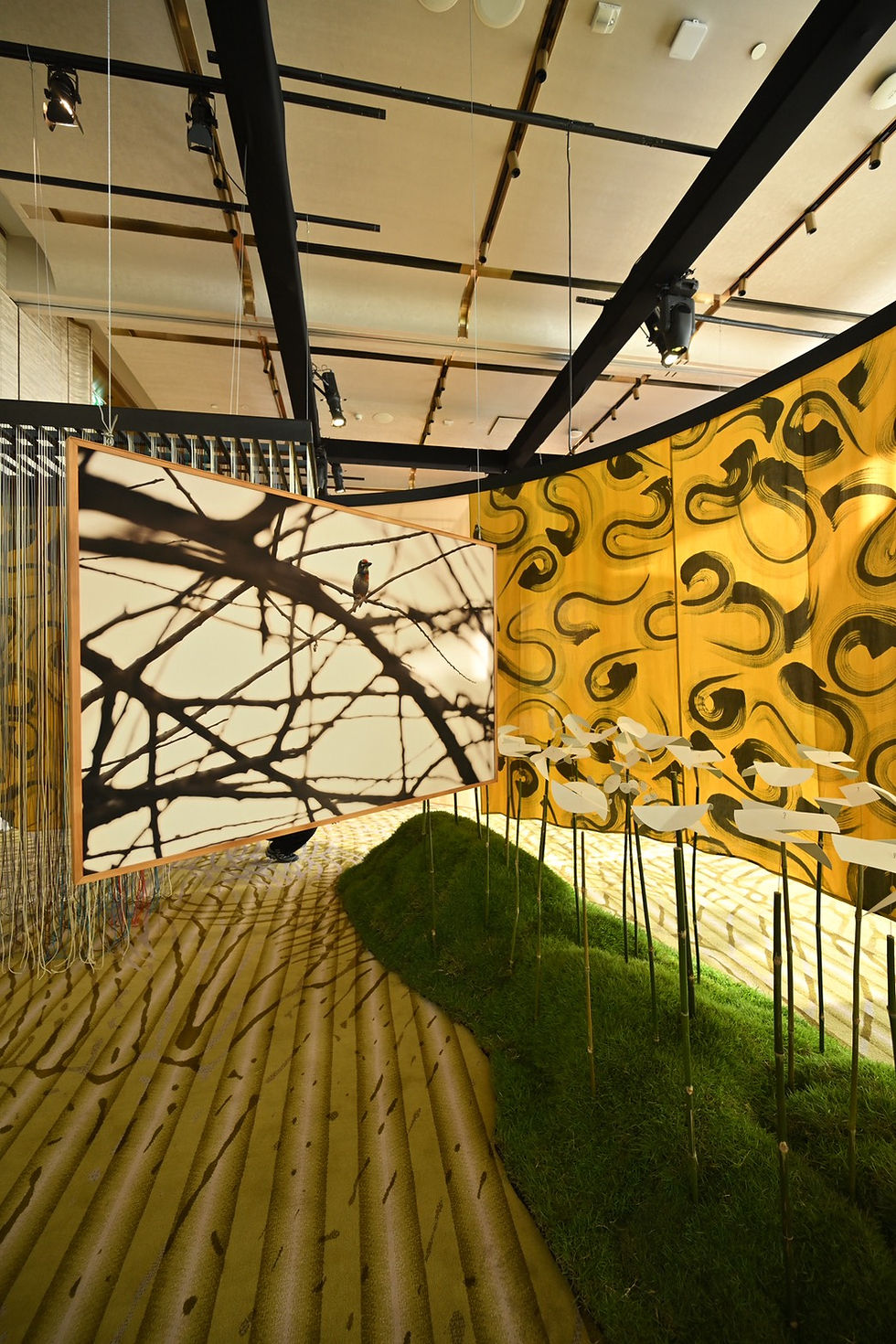
Bangkok has never been short on luxury hotels, but few arrive with a point of view quite like Andaz. At its new outpost on Wireless Road, the brand doesn’t just check guests in, it invites them into a layered narrative of place, told through art, design, and sensory experience.
The recent unveiling of Andaz One Bangkok was less a launch party and more an immersive exhibition. Think of it as a curated walk-through of the neighborhood’s past and present, translated into scent, sound, movement, and material. It’s a direction that signals where hospitality in the city is heading, less about spectacle, more about storytelling that feels rooted and real.
A Hotel That Reads the City
Set between the urban pulse of Bangkok and the calm greenery of Lumphini Park, Andaz One Bangkok positions itself as a kind of mediator between worlds. The concept of a “vertical neighborhood” runs through the property, echoing the layered nature of the city itself, where history, diplomacy, commerce, and lifestyle coexist within a few city blocks.
Wireless Road, or Witthayu, carries its own quiet legacy. Once tied to Thailand’s first radio telegraph station and later home to embassies and global institutions, it has long been a place where communication, culture, and exchange intersect. That context becomes the foundation for the hotel’s artistic direction, not as background, but as material.

Art That Feels, Moves, and Lingers
Rather than filling the space with static artworks, Andaz collaborates with Thai creatives to produce installations that respond to the environment in real time.
One of the most compelling is Scent of Place, where perfumer Ganda Saitum and visual artist Surasak Ittirit translate the neighborhood into fragrance. Notes shift between the calm of Lumphini Park and the kinetic energy of the city, diffused through sculptural objects made from rubber wood and textiles. It’s subtle, almost intangible, but it anchors the experience in memory rather than visuals alone.
Sound, too, becomes a medium. Sound to Be Seen layers field recordings from the surrounding streets with synthesized tones, creating an ambient soundscape that captures Bangkok’s in-between moments, traffic hums, footsteps, fragments of conversation. It’s the kind of noise you usually tune out, reassembled into something unexpectedly poetic.
Visually, Feel the Sight plays with perception. Through light, projection, and reflections, the skyline outside is distorted and reinterpreted, blurring the boundary between what is seen and what is imagined. It mirrors the way Bangkok itself is experienced, never fixed, always shifting depending on where you stand.
The Neighborhood, Reimagined Through the Body
Performance artist Dujdao Vadhanapakorn takes this idea further with A Choreograph of Time, a piece that traces the evolution of Wireless Road through four distinct eras, from early communication networks to diplomatic elegance, corporate ambition, and today’s wellness-driven lifestyle.

The performance doesn’t sit on a stage. It moves through the space, dissolving the line between audience and performer. Guests become part of the choreography, mirroring the way the neighborhood itself is shaped by the people who pass through it.
Craft, Community, and Material Memory
Beyond the sensory installations, there’s a quieter layer to the storytelling, one that focuses on material and craft.
Textile works by Wood & Mountain draw from natural elements like bark and soil, created in collaboration with artisan communities in Chiang Mai. The pieces don’t demand attention, but they ground the space, bringing a sense of slowness and tactility into a setting that could easily lean toward gloss.
Even the culinary experience follows the same philosophy. A reimagined Miang Kham becomes both dish and installation, presented as a miniature landscape where the greenery of Lumphini Park meets the geometry of the city skyline. It’s a reminder that in Thailand, food is never just food, it’s culture, memory, and design all at once.
What makes Andaz One Bangkok stand out is not just the scale or the design, but the intention behind it. There’s a clear effort to move away from the placeless luxury that defines many global hotel brands, and toward something more specific, more grounded.
By working with local artists across disciplines, from scent and sound to performance and craft, the hotel positions itself as part of the neighborhood’s ongoing story rather than a separate entity. It’s a subtle shift, but an important one.
In a city that’s constantly reinventing itself, Andaz doesn’t try to define Bangkok. Instead, it listens, interprets, and reflects it back in ways that feel both contemporary and deeply connected.
[PHOTO: Courtesy of Andaz One Bangkok]


Comments