Sathon: How a Canal Built Bangkok's Most Global Neighborhood

From royal waterways to embassies, skyscrapers, and world-class dining, the story of Sathon reveals how one visionary infrastructure project helped shape modern Bangkok

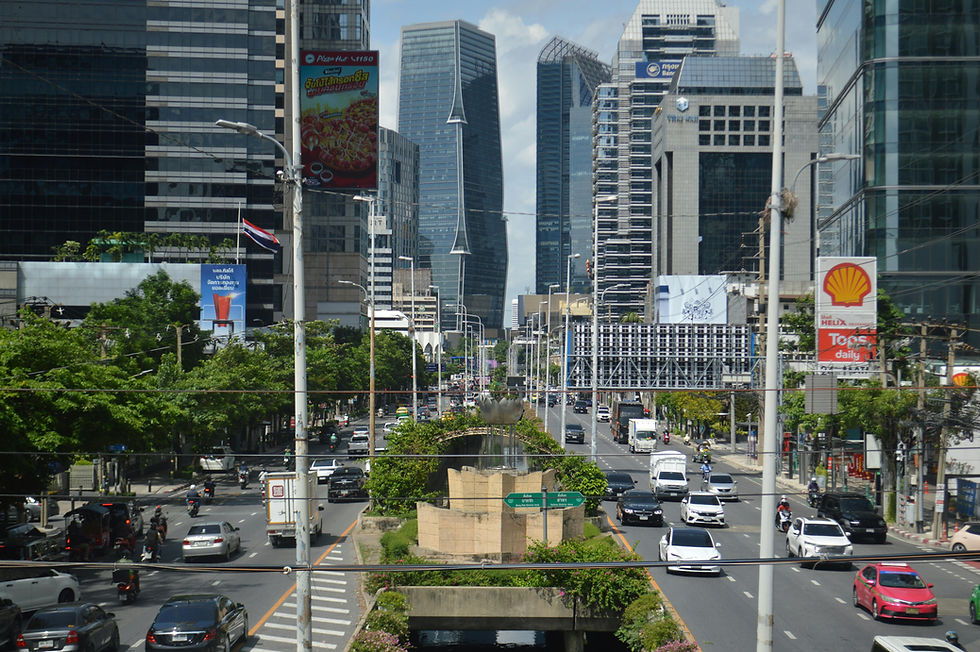
Today, Sathon is synonymous with modern Bangkok. Glass-clad office towers rise above historic streets. International banks, multinational corporations, luxury hotels, embassies, restaurants, rooftop bars, and international schools make it one of the city's most cosmopolitan neighborhoods.
For many expats, Sathon is often their first introduction to Bangkok. It is where people work, live, dine, and socialize. Yet beneath the modern skyline lies a remarkable story that stretches back more than 130 years.
The district's origins can be traced to a single canal, a Chinese-Thai entrepreneur, and a vision that transformed what was once farmland on the edge of the city into one of Southeast Asia's most important business districts.
The Birth of Sathon
The story begins with one of Bangkok's most influential business families.
During the reign of King Mongkut (Rama IV), a wealthy tax farmer named Jao Sua Yim received royal permission to excavate a major canal connecting Bangkok with Samut Sakhon province. Construction began in 1867 and was completed in 1871.
The new waterway, later named Khlong Phasi Charoen, improved transportation and trade while opening up new opportunities for development west of the capital.

His son, Nai Yom, would eventually have an even greater impact on Bangkok's future.
Educated in Singapore and fluent in Thai, Chinese, and English, Nai Yom expanded the family's commercial empire across shipping, trade, and infrastructure. His international outlook and business acumen earned him the trust of both Thai nobility and foreign investors.
The Canal That Created Sathon
In 1895, Nai Yom received royal approval from King Chulalongkorn (Rama V) to excavate another canal.
This new waterway stretched from the eastern bank of the Chao Phraya River near Charoen Krung Road toward Khlong Thanon Trong, an area now occupied by Rama IV Road.

Initially known by various names including Khlong Jao Sua Yom and Khlong Nai Yom, the canal eventually became known as Khlong Sathon after Nai Yom received the noble title Luang Sathon Rajayukta (luang being a viscount equivalent).
The project did more than create a transportation route.
The soil excavated from the canal was compacted along both banks, forming the foundations of what would later become North Sathon Road and South Sathon Road today. In many ways, the modern district was literally built from the canal itself.
Bangkok's First Modern Boulevard
Luang Sathon Rajayukta envisioned more than a canal.
He installed electric poles along the route and planted rows of mahogany trees on both sides. The result was one of Bangkok's most elegant avenues, combining transportation infrastructure with urban planning at a time when such concepts were still relatively new in the region.
Visitors praised the area's broad, shaded roads during the day and illuminated streets at night. Even King Chulalongkorn reportedly admired the transformation.
Long before Sathon became Bangkok's financial district, it was already being recognized as one of the capital's most modern neighborhoods.
From Farmland to International Hub
Before the canal was dug, much of the area consisted of agricultural land, including areca nut and betel plantations.
Recognizing the potential of his infrastructure project, Luang Sathon Rajayukta acquired large tracts of land surrounding the canal. As development accelerated, he subdivided the land into spacious plots that attracted foreign merchants, government agencies, and international companies.
The strategy worked.
Foreign businesses established offices and residences in the area, helping create one of Bangkok's earliest international communities. More than a century later, Sathon continues to play that role as a preferred address for multinational corporations, embassies, and expatriates.
The Mansion That Witnessed It All
As the district developed, Luang Sathon Rajayukta selected a prime parcel of land near Khlong Chong Nonsi to build an extraordinary family residence.

Known as Sathon House, the grand mansion reflected the architectural tastes of the late nineteenth century. Built in a Western style, the three-story brick residence featured stained glass, carved stone columns, elaborate plasterwork, teak doors and windows, and a dramatic central staircase.
Sadly, Luang Sathon Rajayukta died at just 38 years old before fully enjoying the legacy he had created.
The family's fortunes later declined, and Sathon House eventually became the property of the Crown Property Bureau in 1916.
A House of Many Lives
Over the following century, Sathon House experienced several remarkable transformations.

The building operated as the Hotel Royal Bangkok in the 1920s and later as the Thailand Hotel.
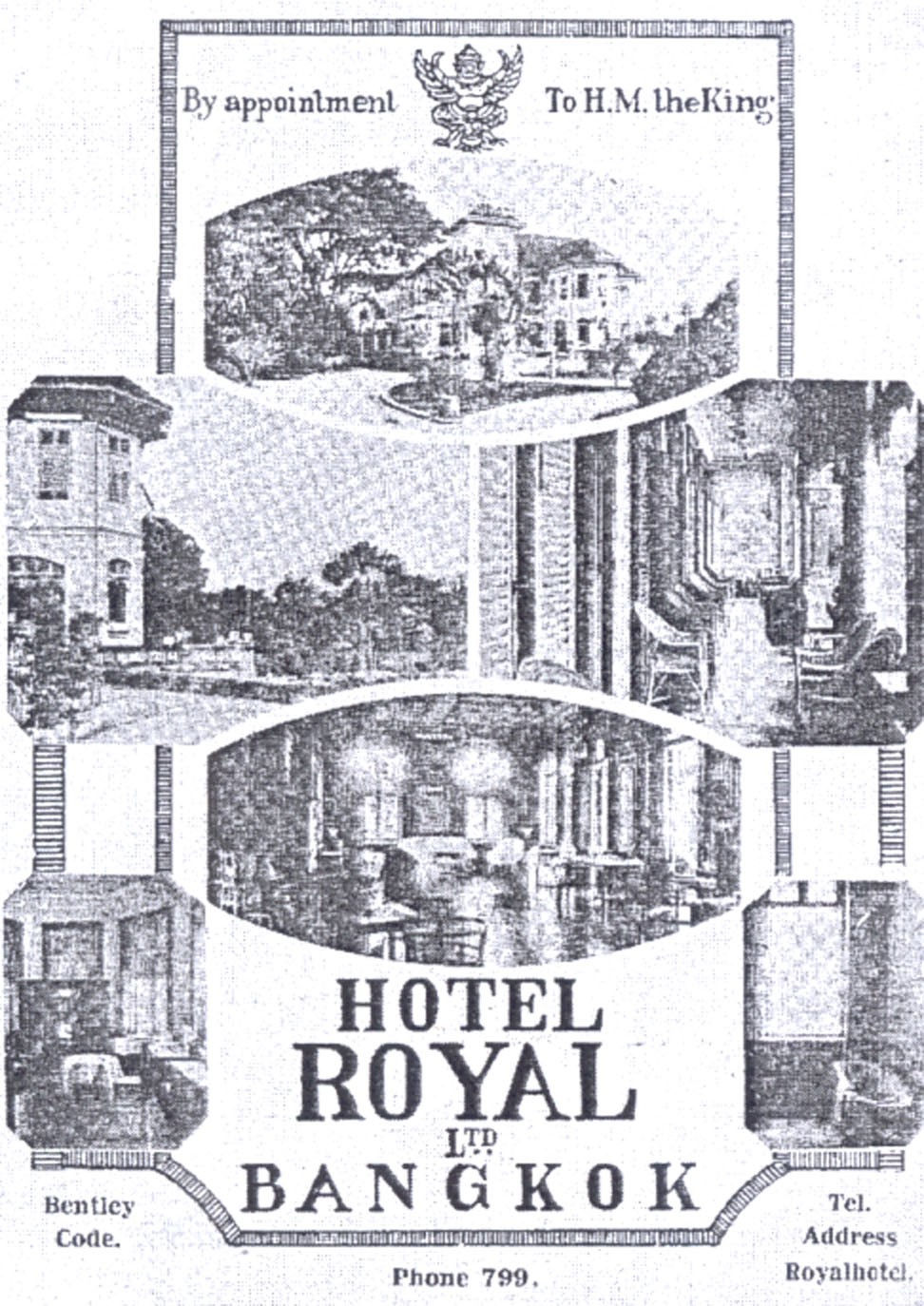
From 1948 until 1999, it served as the Embassy of the Soviet Union, witnessing decades of global political change from the heart of Bangkok.

Recognizing its historical significance, the Fine Arts Department registered Sathon House as a protected historic building in 2000.
Today, the beautifully restored mansion forms part of W Bangkok as The House on Sathorn, standing as one of the city's finest examples of heritage preservation integrated into a contemporary urban landscape.

The House on Sathorn: A Landmark That Preserves a Neighborhood's Memory
While Sathon's skyscrapers symbolize modern Bangkok, few buildings embody the district's history as powerfully as The House on Sathorn.
The building's architectural details reveal an extraordinary level of craftsmanship. Its imposing three-story brick structure, elegant symmetry, stained-glass transoms, carved stone columns, decorative plasterwork, and sweeping teak staircase were designed not only to impress but also to communicate status, sophistication, and a global outlook.

At a time when Bangkok was opening itself to international influences, the mansion reflected both Western architectural trends and the confidence of a new generation of Thai entrepreneurs engaged with the wider world.
One of the most fascinating aspects of the house is the collection of symbols, motifs, and decorative elements embedded throughout the building. These details serve as visual signatures linking the owner to the place he helped create. Every corridor, window, and decorative panel contributes to a larger story about the family's legacy and their role in shaping modern Bangkok.
Its restoration has not only saved an important historic structure but has also preserved the story of the man whose vision laid the foundations for the district itself.
Sathon Today: Where Past and Present Meet
Although Khlong Sathon no longer functions as a transportation artery, it remains a powerful reminder of how modern Bangkok was built.
The canal that once carried goods and passengers now sits quietly amid office towers and luxury residences. Nearby, embassies, Michelin-starred restaurants, cocktail bars, international schools, and corporate headquarters continue to attract people from around the world.
For expats living in Bangkok, Sathon offers more than convenience. It provides a living connection between the city's past and present.
Every morning, thousands of professionals travel along roads that originated as canal embankments. Historic mansions stand alongside skyscrapers. Heritage architecture shares the skyline with modern towers.
Few neighborhoods capture Bangkok's transformation as vividly as Sathon.
Understanding its history reveals that behind today's bustling financial district lies a story of vision, entrepreneurship, and urban innovation that helped shape the city we know today.

Sathon Quick Facts
• Established as a separate district in 1989
• Covers approximately 10 square kilometers
• Comprises Yan Nawa, Thung Wat Don, and Thung Maha Mek subdistricts
• Home to many embassies and multinational corporations
• One of Bangkok's most important business and residential districts
• Named after Luang Sathon Rajayukta, the entrepreneur who excavated Khlong Sathon
• Home to historic house is now part of W Bangkok and open for the general public
[PHOTO: Courtesy of W Bangkok]


Comments