Starbucks Deepens Its Roots in Northern Thailand With a New Coffee Farmer Initiative
- Manta

- May 6
- 4 min read
Ahead of World of Coffee Bangkok 2026, Starbucks launches a three-year program to support northern Thai coffee farmers while spotlighting one of Asia’s leading female master roasters, Naoko Kidota

For many coffee drinkers, a daily cup begins and ends at the café counter. But behind every latte or pour-over lies an increasingly urgent conversation about climate change, sustainability, and the future of coffee farming.
At World of Coffee Bangkok 2026, held between 7-9 May 2026, Starbucks is bringing that conversation to the forefront with the launch of a new three-year initiative aimed at supporting Arabica coffee farmers across Northern Thailand. Developed in partnership with the Integrated Tribal Development Foundation (ITDF), the program focuses on sustainable farming, post-harvest management, and climate resilience in key coffee-growing provinces including Chiang Mai, Chiang Rai, and Mae Hong Son.
Why Northern Thai Coffee Matters
Thailand’s Arabica coffee has quietly become one of the country’s most distinctive agricultural products. Grown in cooler mountainous regions, northern Thai beans are known for their layered aromatics, gentle acidity, and nuanced flavor profiles. But like coffee-growing regions across the world, Thailand’s farms are facing mounting pressure from rising temperatures, irregular rainfall, and increasing pest activity.


The new Starbucks initiative aims to address those challenges through practical, long-term support rather than short-term interventions. Over the next three years, farmers and local field teams will receive training in soil management, pruning, shade management, and post-harvest techniques, while Starbucks agronomists from the company’s Farmer Support Center in Sumatra will work directly with farming communities in northern Thailand.
The project will also establish model farms certified under Starbucks’ Coffee and Farmer Equity (C.A.F.E.) Practices, designed as hands-on learning spaces where farmers can exchange techniques and strengthen sustainable cultivation methods.
More importantly, the initiative reflects a growing recognition that the future of coffee depends as much on supporting farming communities as it does on developing new blends or brewing trends.
A Longstanding Connection With Thai Coffee
Starbucks’ relationship with Thailand’s coffee-growing communities stretches back more than two decades. The company first introduced Starbucks® Muan Jai™ Blend in 2003, using Arabica beans sourced from Northern Thailand and returning five percent of proceeds back to local farming communities. The blend remains exclusive to Thailand and has become a symbol of the company’s ongoing ties to the region.

The company has also invested in community-focused programs through its Community Stores in Thailand, contributing funds toward education, infrastructure, and quality-of-life projects in coffee-growing areas. Since 2003, Starbucks and its foundation have contributed more than THB 20 million toward social and environmental development projects in partnership with ITDF, including healthcare access for remote communities.
While sustainability has become a common marketing phrase in the coffee world, initiatives like these highlight the reality that maintaining coffee quality increasingly requires investment at the agricultural level.
Meet Naoko Kidota, One of Starbucks’ Leading Master Roasters
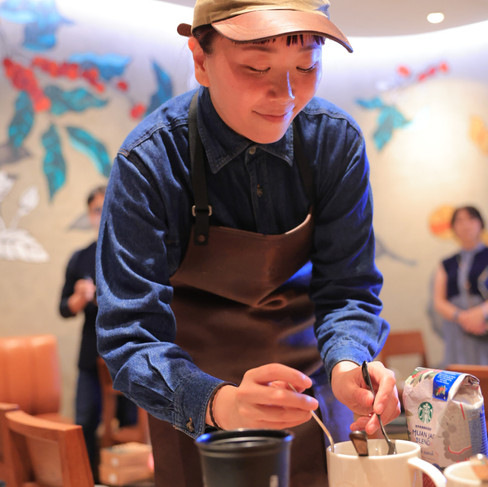
Among the key figures appearing at World of Coffee Bangkok 2026 is Naoko Kidota, one of only two certified Starbucks Master Roasters in Asia and among approximately 10 worldwide.

Based at the Starbucks Reserve Roastery Tokyo, Kidota’s journey with Starbucks began in 2009 as a barista. Over the past 17 years, she has worked across seven Starbucks stores, traveled extensively to coffee-growing regions around the world, and deepened her understanding of how cultivation, roasting, and flavor intersect.
Her experiences include visits to Hacienda Alsacia in Costa Rica, Starbucks’ global coffee research and development farm, as well as participation in the Starbucks Partner Sumatra Origin Experience program in 2025. Those experiences eventually led her toward roasting, where she now oversees roast quality, coffee quality management systems, and sensory training for future generations of roasters and baristas.
Beyond Starbucks, Kidota also plays an influential role in Japan’s specialty coffee industry as Vice Chair of the Roast Masters Committee for the Specialty Coffee Association of Japan (SCAJ). She has earned top placements in the Japan Cup Tasters Championship and served as a head judge for major national coffee competitions, including the Japan Roasting Championship and Japan Brewers Cup.
At World of Coffee Bangkok, Kidota will lead coffee tastings and immersive sensory experiences exploring Starbucks’ roasting philosophy, offering visitors a deeper look into how roast profiles shape acidity, aroma, and body in the cup.



Starbucks at World of Coffee Bangkok 2026
Visitors to the Starbucks showcase at World of Coffee Bangkok 2026 can expect a broader exploration of coffee origins and roasting styles. The company will present five single-origin Starbucks Reserve™ coffees alongside three blends, including highlights from Thailand, Costa Rica, Colombia, and Indonesia.
Thai coffees will take center stage, from the light-roasted Starbucks Reserve™ Thailand Mae Hong Son to the medium-roasted Starbucks® Muan Jai™ Blend. Guests can also participate in Aroma Lab experiences, guided coffee cuppings, and latte art demonstrations by Starbucks Thailand Coffee Masters.
The showcase also marks the debut of a new iced coffee beverage set to launch in Thailand this June.
[PHOTO: Courtesy of Starbucks]


Comments